Thursday, April 23, 2026

Bharat's 3 stage nuclear power programme

Bharat has achieved the first criticality at the 500 MWe "Prototype Fast Breeder Reactor" (PFBR) in the Kalpakkam nuclear power plant in Tamil Nadu on April 6, 2026. MWe means megawatt electrical. It is a unit of power. 1 MWe means one million watts of electric capacity generated by a power plant.

First criticality signals the start of the self-sustaining nuclear chain reaction and Bharat entering the second stage of the three-stage nuclear power programme as envisaged by the nuclear theoretical physicist and the father of Bharat's nuclear programme, Dr Homi Jehangir Bhabha. *

This is an essential step before the rector begins full-scale power generation. The PFBR is designed to use thorium-232, which Bharat has in abundance. It will fuel the third stage of Bharat's nuclear power programme.

This is a major step towards clean & green energy. A positive move towards "Energy Security", "Atmanirbhar Bharat", and "Viksit Bharat".

The 3 stages of Bharat's nuclear power programme are as follows: -

Stage 1: Pressurised Heavy Water Reactors (PHWRs) 

1. Uses natural unenriched uranium (U-238), a fertile** material, as a raw material. Heavy water (D20 - two deuterium, or heavy hydrogen, atoms and one oxygen atom) is used as both coolant and neutron moderator.
2. Uranium atoms transmute*** to plutonium-239 (Pu-239) when they absorb high-energy neutrons on collision. 
3. Pu-239 undergoes fission**** reaction on collision with slow-moving thermal neutrons, releasing extreme heat and more neutrons.
4. Pressurised heavy water absorbs the heat.
5. The steam produced drives the turbine. An electrical generator connected to the turbine generates electricity.

More than 18 PHWRs are generating power, which includes 220 MWe, 540 MWe, and 700 MWe units. 

Stage 2: Fast Breeder Reactors (FBRs)

1. The term 'breeder' means the creation of more fuel than is required for consumption. The FBR is designed to enhance fuel efficiency while reducing nuclear waste. FBRs recycle the spent uranium-plutonium mixed oxide (MOX) fuel from stage 1 PHWRs. FBRs use plutonium-239 (Pu-239) from stage 1 and uranium-238 as fuel. Thorium-232 (Th-232) can also be used as fuel.
2. Fissile Pu-239 core is covered by a "blanket" of fertile U-238 or Th-232.
3. Pu-239 split and release fast neutrons due to fission. These neutrons are absorbed by fertile U-238 and Th-232. U-238 transmutes to more Pu-239, and Th-232 to uranium-233 (U-233).
4. FBRs use liquid sodium or liquid lead as coolant because they do not slow down the neutrons like heavy water, which is used as coolant and moderator in PHWRs.

Stage III: Thorium-Based Reactors

1. Uses U-233 from stage 2 (FBR) and Th-232 as fuel
2. U-233 will convert a vast amount of Thorium Th-232 deposits in Bharat to more U-233, which can power not just entire Bharat but the entire world for centuries.

---------------------------------------------------------------------------------------------------------------

* Dr Homi Jehangir Bhabha was on board Air India Flight 101, which crashed into Mont Blanc in the Alps minutes before landing in Geneva on January 24, 1966. The deep state used the CIA to orchestrate the crash in order to thwart Bharat's nuclear programme.

** Fertile vs fissile material

1. Fertile materials like unenriched natural uranium (U238), thorium (Th232) do not undergo a fission chain reaction on their own, unlike fissile materials like uranium (U235, U233) and plutonium (Pu239).
2. Fertile materials transmute to fissile material when they absorb high-energy neutrons on collision, whereas fissile materials can split with slow-moving thermal neutrons, releasing energy. 
3. Fertile materials are used in breeder reactors to generate more fissile material than they consume.

*** Transmute means to change from one form or substance into another,

**** Unlike nuclear fusion, which combines light atoms like hydrogen and deuterium to release energy as happens inside the sun, nuclear power plants use nuclear fission, which splits heavy atoms like uranium and plutonium to release energy. Nuclear fusion releases 3-4 times more energy than nuclear fission; however, it is not yet technologically feasible to maintain 100 million degree plasma.

Wednesday, January 14, 2026

Secularism

There is a misconception that "religion" means "dharma" in Hindi.

Religion is about a way of worshipping.

Dharma is the set of principles for upholding cosmic and personal order.

"Religion" means "panth" in Hindi.

"Panth" means a "sect" in English.

"Sect" means a group of people with somewhat different religious beliefs from those of a larger group to which they belong. However, in Sanatan Dharma all the religious beliefs are treated as "sects".

Secularism is the philosophy of keeping religious and state matters separate or staying neutral to religious beliefs.

So in Hindi, "secularism" means "panth nirpeksh", not "dharm nirpeksh".

Tuesday, December 2, 2025

Higher dimension beings?

Let's assume that there are advanced life forms that consider us primitive even after we have reached the pinnacle of our spiritual and intellectual excellence. 

Are they from a higher dimension? Or is it merely science fiction?

Do they have a larger brain than us with the ability to use it completely?

Are they also guided by their conscience or influenced by the influencer? Or they don't have any conscience or influencer.

Is there a highest form of existence that doesn't require a body? 

Does that make them just the most intelligent life form devoid of emotions? Or have they also mastered the ability to control their emotions?

Wednesday, November 26, 2025

Shri Ram Lala's complexion

I am curious to know why Shri Ram Lala's complexion in Ayodhya's Ram Mandir is not the same as is mentioned in the Valmiki Ramayana. Shri Ram had a dark brown complexion. Please don't misunderstand me. Trust me, I have no intention to criticise anyone. I am certainly guilty of being curious. 

Bottom left - google search screenshot Bottom right - facebook.com/TheVedShastra


Tuesday, June 10, 2025

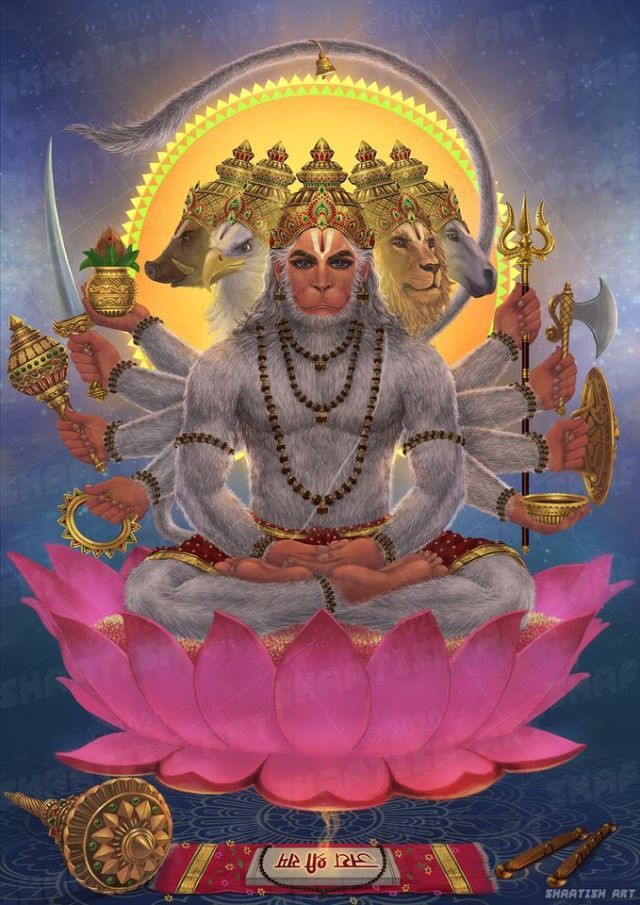
श्री हनुमान चालिसा (Printing mistakes corrected as instructed by Shri Rambhadracharya)


॥ श्रीहनुमते नमः ॥


श्री हनुमान चालीसा


दोहा

श्रीगुरु चरन सरोज रज, निज मनु मुकुरु सुधारि।

बरनउँ रघुबर बिमल जसु, जो दायकु फल चारि॥

बुद्धिहीन तनु जानिके, सुमिरौं पवन-कुमार।

बल बुधि बिद्या देहु मोहिं, हरहु कलेस बिकार॥


॥ चौपाई ॥


जय हनुमान ज्ञान गुन सागर। जय कपीस तिहुँ लोक उजागर॥

राम दूत अतुलित बल धामा। अंजनि-पुत्र पवनसुत नामा॥

महाबीर बिक्रम बजरंगी। कुमति निवार सुमति के संगी॥

कंचन बरन बिराज सुबेसा। कानन कुंडल कुंचित केसा॥

हाथ बज्र औ ध्वजा बिराजै। काँधे मूँज जनेऊ साजै॥

संकर स्वयं केसरीनंदन। तेज प्रताप महा जग बंदन॥

बिद्यावान गुनी अति चातुर। राम काज करिबे को आतुर॥

प्रभु चरित्र सुनिबे को रसिया। राम लषन (लखन) सीता मन बसिया॥

सूक्ष्म रूप धरि सियहिं दिखावा। बिकट रूप धरि लंक जरावा॥

भीम रूप धरि असुर सँहारे। रामचन्द्र के काज सँवारे॥

लाय सजीवन लखन जियाये। श्रीरघुबीर हरषि उर लाये॥

रघुपति कीन्ही बहुत बड़ाई। तुम मम प्रिय भरतहि सम भाई॥

सहस बदन तुम्हरो जस गावैं। अस कहि श्रीपति कंठ लगावैं॥

सनकादिक ब्रह्मादि मुनीसा। नारद सारद सहित अहीसा॥

जम कुबेर दिगपाल जहाँ ते। कबि कोबिद कहि सके कहाँ ते॥

तुम उपकार सुग्रीवहिं कीन्हा। राम मिलाय राज पद दीन्हा॥

तुम्हरो मंत्र बिभीषन माना। लंकेस्वर भए सब जग जाना॥

जुग सहस्र जोजन पर भानू। लील्यो ताहि मधुर फल जानू॥

प्रभु मुद्रिका मेलि मुख माहीं। जलधि लाँघि गये अचरज नाहीं॥

दुर्गम काज जगत के जेते। सुगम अनुग्रह तुम्हरे तेते॥

राम दुआरे तुम रखवारे। होत न आज्ञा बिनु पैसारे॥

सब सुख लहै तुम्हारी सरना। तुम रच्छक काहू को डर ना॥

आपन तेज सम्हारो आपै। तीनों लोक हाँक तें काँपै॥

भूत पिसाच निकट नहिं आवै। महाबीर जब नाम सुनावै॥

नासै रोग हरै सब पीरा। जपत निरंतर हनुमत बीरा॥

संकट तें हनुमान छुड़ावै। मन क्रम बचन ध्यान जो लावै॥

सब पर राम राय सिर ताजा । तिन के काज सकल तुम साजा॥

और मनोरथ जो कोइ लावै। सोइ अमित जीवन फल पावै॥

चारों जुग परताप तुम्हारा। है परसिद्ध जगत उजियारा॥

साधु संत के तुम रखवारे। असुर निकंदन राम दुलारे॥

अष्ट सिद्धि नौ निधि के दाता। अस बर दीन जानकी माता॥

राम रसायन तुम्हरे पासा। सादर हो रघुपति के दासा॥

तुम्हरे भजन राम को पावै। जनम जनम के दुख बिसरावै॥

अंत काल रघुबर पुर जाई। जहाँ जन्म हरि-भक्त कहाई॥

और देवता चित्त न धरई। हनुमत सेइ सर्ब सुख करई॥

संकट कटै मिटै सब पीरा। जो सुमिरै हनुमत बलबीरा॥

जै जै जै हनुमान गोसाईं। कृपा करहु गुरु देव की नाईं॥

यह सत बार पाठ कर जोई । छूटहि बंदि महा सुख होई॥

जो यह पढ़ै हनुमान चलीसा। होय सिद्धि साखी गौरीसा॥

तुलसीदास सदा हरि चेरा। कीजै नाथ हृदय महँ डेरा॥


दोहा


पवनतनय संकट हरन, मंगल मूरति रूप।

राम लषन (लखन) सीता सहित, हृदय बसहु सुर भूप ॥


॥ इति श्री हनुमान चालीसा ॥


Tuesday, January 14, 2025

"Maha Kumbh"

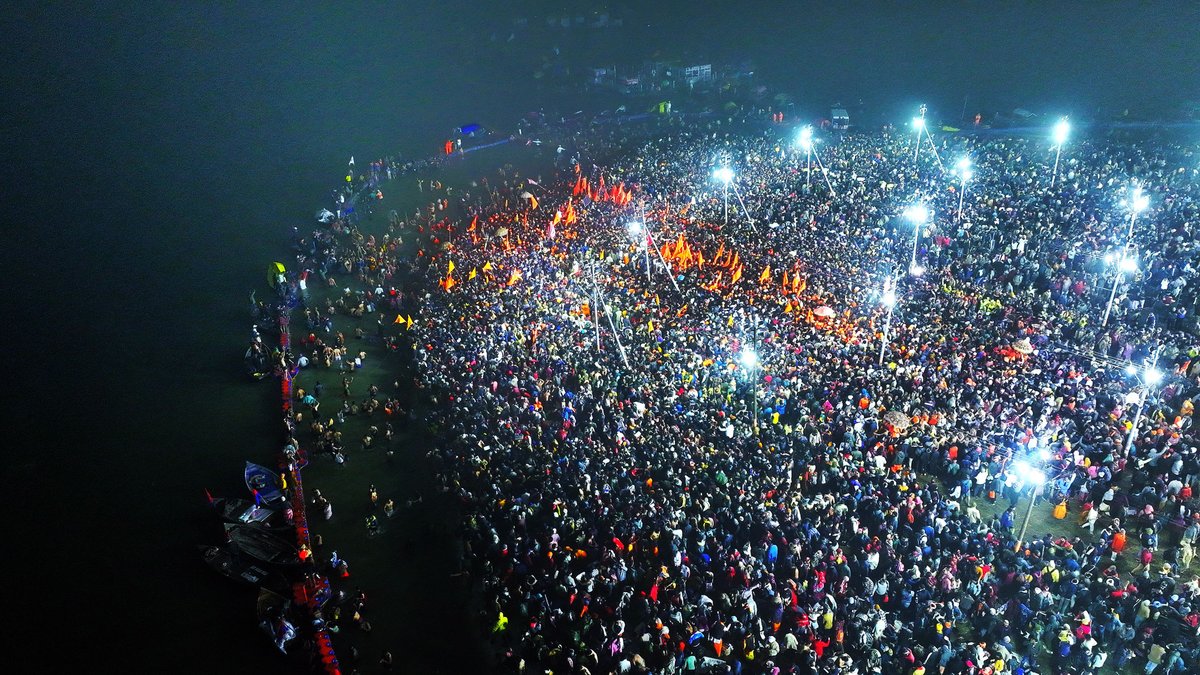
"Maha Kumbh" is the world's largest religious congregation in Prayagraj on the banks of the Sangam. Sangam, or Triveni, is where River Ganga, River Yamuna, and River Saraswati meet. "Ardh Kumbh" happens once every 6 years of the solar cycle, "Kumbh" happens once every 12 years of the solar cycle, whereas "Maha Kumbh" happens once every 144 years of the solar cycle due to the rare alignment of the Sun, Moon, Jupiter, and Saturn.  It is considered very auspicious to take a dip at the Sangam. Bathing in the Sangam during Maha Kumbh is even more propitious.

Kumbh means a pot. According to Sanatan dharma, once the Devtas and the Asuras churned the ocean on Lord Vishnu's suggestion for prosperity. Amrit kalash, or the pot containing the potion of immortality, emerged from the ocean among other things. There was a tussle between the Devtas and the Asuras for Amrit, due to which the Amrit spilt at four places: Prayagraj, Haridwar, Ujjain, and Nashik.

Today, on January 14, 2025, millions of devotees bathed in the Sangam at Prayagraj on the auspicious occasion of Makar Sankranti. UP chief minister Yogi Adityanath wrote on the microblogging website, X: "Today, on the first Amrit Snan festival, more than 3.50 crore revered saints/devotees earned the holy benefit of bathing in the uninterrupted-clean Triveni."


Courtesy of  https://x.com/myogiadityanath/status/1878994859442557018

Makar Sankranti is a festival dedicated to the Surya, or the Sun. It is celebrated every year on January 14, except in a leap year when it is celebrated on January 15. It marks the transition of the sun from the zodiac of Sagittarius (dhanu) to Capricorn (makara). Since the Sun moves from south to north (uttar in Hindi), this festival is also called "Uttarayan.". 

Tuesday, November 5, 2024

"Sanaatan Vedic Dharm" and Bhaarat

Sanaatan means eternal. Dharm means duties and responsibilities. "Sanaatan Vedic Dharm" is the most ancient religion. It tells us the way of life as mentioned in the Veds. Ved means knowledge. Ved is derived from Vid, which means "to know." The Veds are the "Sanaatan Gyan," or eternal knowledge, of "Sanaatan Dharm," or eternal religion. The Veds are Shruti (what one listens to). Some of the blessed ancient sages who went into deep meditation listened to the "apauruṣeya" (not a man). The Veds are a divine revelation.

"Hindus" and "Hinduism" were coined by the invaders of this subcontinent. They called the people of this subcontinent "Sindhus," those who live on the other side of the river Sindhu. Some of them pronounced the consonant "s" as "h," so from "Sindhus," it became "Hindus." They also called this subcontinent "Hindustan." So "Hindu" is merely a geographical identity given by the invaders of this subcontinent. It has got nothing to do with religion.

The colonisers called this subcontinent "India," derived from the river "Indus." They further claimed that India was not a country until they did us a favour by colonising us.

Long before the invaders and colonisers, this subcontinent was known as "Bhaarat," derived from the ancient Emperor by the name "Bharat," who conquered the entire subcontinent.

The West may choose to call us whatever they fancy dwelling in their castle of ego. The name of our country is "Bhaarat," not India, and the people are "Bhaaratiyas," not Hindustanis, Hindus, or Indians.

Country: "Bhaarat"

People: "Bhaaratiyas"

Religion: There are many religions practiced in "Bhaarat." The most ancient religion is "Sanaatan Vedic."


Saturday, March 9, 2024

Maha Shivaratri

Maha Shivaratri is the festival of the convergence of Shiva and Shakti. 

It is believed that Lord Shiva finally married Goddess Parvati after her severe, unparalleled austerity.

Devotees celebrate this day by observing a day-long fast and breaking it the next day after the sun rises. 

On this day, the devotees bathe both in the morning and in the evening before performing the first of the four prahar (segment) pujas, which typically begins after the sun sets and continues till the sun rises.

It is believed that Lord Shiva becomes pleased with those who celebrate this day with complete devotion and even grants 'Moksha' (salvation) to those on whom he becomes extremely pleased. 

In the 40th chapter of the Kotirudra Sanghita segment of Shiva Mahapurana titled 'Nishadha Charitra', it is mentioned that long ago, a sinner who was a hunter by profession observed a night-long fast in his search for food for his family. He was unaware that it was the night of Maha Shivaratri. He sat on a Bilva tree near a pond in a forest with some water to drink. Every time he would attempt to shoot an arrow at an animal that would come to quench its thirst, some Bilva leaves and water would fall below where there was a Shiva Jyotirlinga. This happened on all four prahars. Even though the hunter did this unknowingly, he got rid of all his sins and even developed a conscience. Lord Shiva appeared before him and blessed him to live a life of worldly comforts. He also told him that one day he would help Lord Rama, and with Lord Rama's blessings, he would attain Moksha. So it is said that if a sinner can attain Moksha, then there are chances that others who perform puja with complete devotion can attain Moksha too. 

Om Namah Shivay! Har Har Mahadev!

Wednesday, March 6, 2024

The dichotomy of India's economic growth

While India is currently (March 6, 2024) the fifth-largest economy in the world, most Indians still feel the pinch.

The current government envisages India becoming the third-largest economy in the world by 2030. However, Indians will rejoice more when their per capita income increases commensurately. 

Although I am not an economist, I reckon this can happen when:

1. Education and skill development go hand-in-hand.

2. Every Indian has access to affordable, world-class medical care.

3. India does well both in the agriculture and manufacturing sectors.

4. Inflation is kept under control, and the vast Indian middle class can earn and save more.

5. The tax burden on the middle class is decreased by taxing the super rich more while giving incentives to the national wealth creators.

6. Efficient law enforcement and timely justice.

7. Immaculate execution of government schemes for the benefit of the poor.

8. Political will and political stability.

9. Population control.

10. Adequate defence budget to keep Indian armed forces strong and motivated.

Although the current government is already working on the above-mentioned areas, we expect a lot more.

Saturday, June 17, 2023

Roshogolla

Roshogolla not Rasgulla.

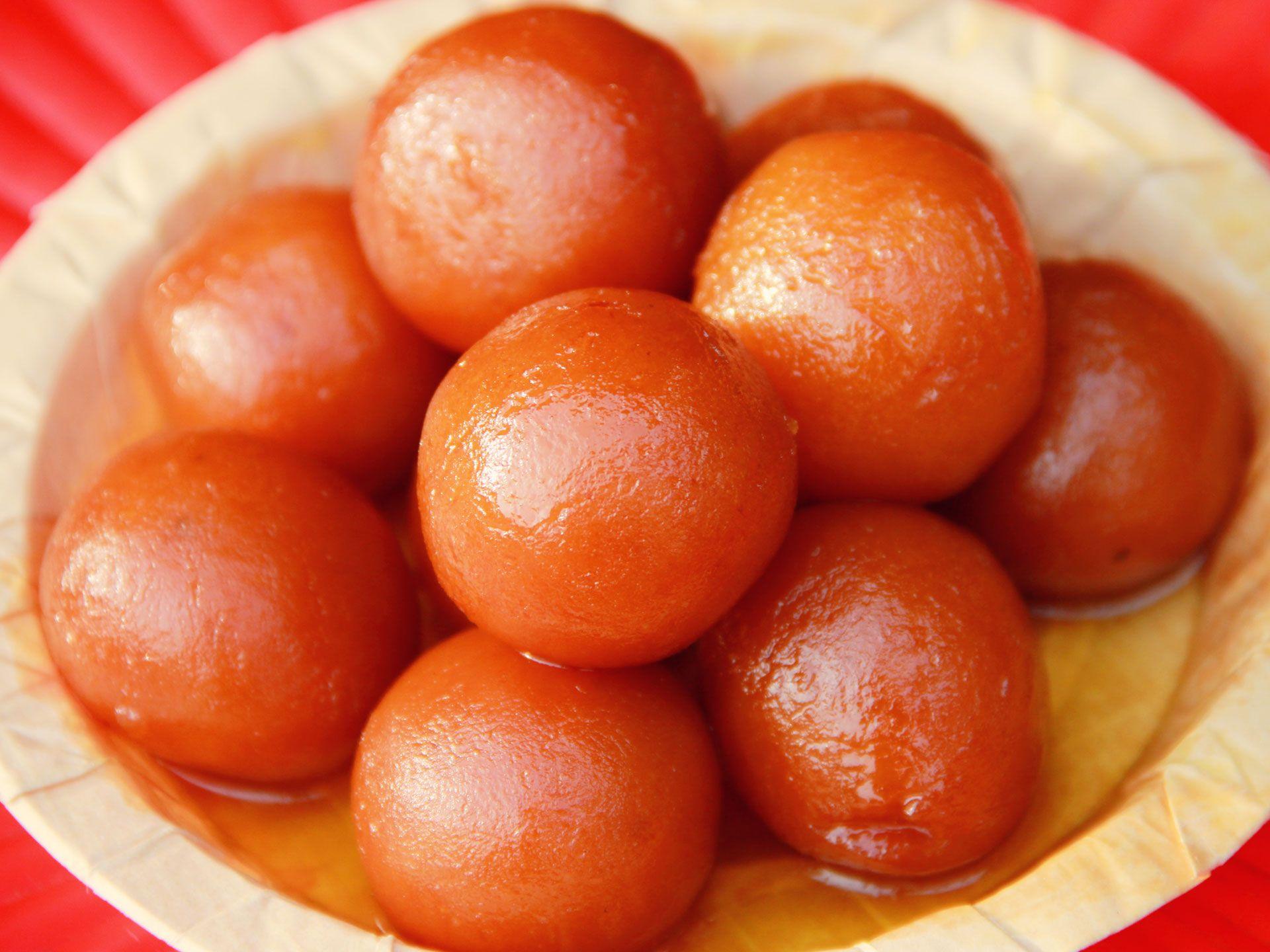
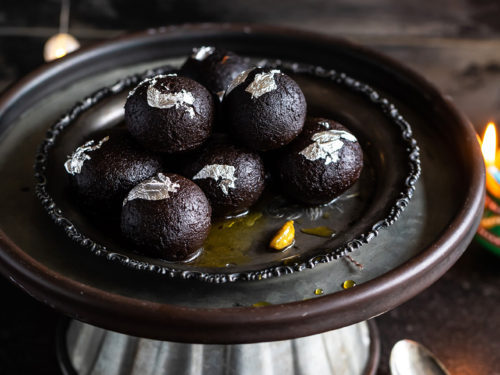
Yes, that is the way it is pronounced by Bengalis, and that is how it is supposed to be pronounced since it is a Bengali sweet dish. And for God’s sake, there is no kala (black) rasgulla; that’s Gulab Jamun. Roshogolla consists of chenna (Indian processed cheese), whereas Gulab Jamun consists of khoya.

Chenna is prepared by adding a sour substance like vinegar, lime juice, or yoghurt to boiled milk (1 tablespoon of sour substance in 1 litre of milk), whereas Khoya is prepared by simmering and stirring full-fat milk in a shallow iron pan for several hours till the milk gets thickened.

Roshogolla is the ultimate sweet for me, so it hurts when people casually choose to call it by a different name, or worse, when they can’t distinguish between Roshogolla and other sweets.

Both the states of Odisha and West Bengal are at loggerheads over the origin of Roshogolla; however, in 2017, West Bengal got the GI (geographic indications) tag for a variant known as Banglar Rasogolla.

Preparation: -

Add a sour substance like vinegar, lime juice, or yoghurt to boiled milk (1 tablespoon of sour substance in 1 litre of milk = 5 cups).

As soon as the milk gets curdled (which happens as soon as you stir after adding the sour substance) and you see the whey, pour the curdled milk into a pan covered with a thin cotton cloth.

Wrap the cotton cloth around the curdled milk and gently squeeze the whey out of it.

Rinse the contents of the cloth (keep it covered) with water to get rid of the smell of the sour substance.

Put a weight on the bundle for 5 minutes.

Take out the chenna from the cloth and make small balls of chenna.

Drop these chenna balls gently in the sugar syrup and simmer it for 8–10 minutes.

Switch it off and allow it to cool. Add 1 tablespoon of organic rose water for aroma and taste.

To make syrup, add 2 cups of sugar to 5 cups of water.


Roshogolla


Courtesy - https://thebengalstory.com/english/wp-content/uploads/sites/2/2018/11/rosho-e1541657198134.jpg


Gulab Jamun


Courtesy - https://wallpapercave.com/wp/wp2157279.jpg


Kalo Jam or Kala Jamun

Courtesy - https://www.cookwithmanali.com/wp-content/uploads/2020/10/Kala-Jamun-500x375.jpg


===================================================================================================================================================

I don’t claim to be a cook, let alone a good one; however, I love to eat. So anyone is welcome to correct me. I’ll also appreciate any suggestions to improve the content.


Friday, June 16, 2023

Shivling


Courtesy - https://shrikashivishwanath.org/frontend/images/shivlingameaning.gif


If Shivling is not a male organ, then why is it embedded in Yoni?

1. If someone derives sadistic pleasure from ridiculing a religious belief, then please stay happy in your delusional paradise and do not bother to read whatever is written below because you are the one who is all-knowing. So celebrate your knowledge.

2. Let me draw your attention to the fact that we barely understand our visible universe. Having said that, are you saying that we want to use our so-called intellect to understand that entity (the Supreme Being) whom even the creator of our universe, Lord Brahma, does not understand?

Good Luck!

3. The point is that our logic and reasoning can only take us so far, which, trust me, is not even qualified to be called "far." This applies even to the most intelligent lifeforms, which are way more intelligent than mankind. So empty your cup.

Shiva means "The Auspicious One." Linga means "sign or symbol".

Shiva The Almighty, the Para Brahman, the Supreme Soul, the source of all energies, is "Nirakaar" (has no form), "Anadi" (has no beginning), and "Anant" (has no end). Shiva is also known as Shambhu, Swayambhu, and Sadashiva, meaning that Shiva is the eternal soul who has no creator above him. In Sanatan Dharma, a form was required to be given to the formless so that ordinary mortals could worship. That form, symbol, or linga appeared as the "infinite pillar of fire" between Brahma and Vishnu when they were fighting for supremacy.

Vishnu transformed himself into a boar and went down to find the origin of the pillar of fire, but he returned unsuccessfully. Brahma transformed himself into a swan and flew up to find the limit of the pillar of fire. He soared and soared, unable to find Shiva's limit. He met Ketaki Flower on the way, who told Brahma that he had been existing since the beginning. However, even he didn't know its origin or limit. Brahma requested the Ketaki Flower to testify before Vishnu that he had discovered the limit. The Ketaki flower agreed. Vishnu accepted Brahma's superiority when the Ketaki flower testified.

Shiva became pleased with Vishnu and blessed him with equal status, saying that he would also be worshipped. However, Shiva became very angry at Brahma because he lied to become worshipable. Shiva opened his third eye and manifested Bhairav, who severed the fifth head of Brahma. Shiva spared Brahma's life at Vishnu's request. Shiva cursed Brahma, saying he would not be worshipped by anyone. He also prohibited the Ketaki flower from being used for worship. When Brahma begged for forgiveness, Shiva granted him the boon of being the presiding deity of all the yagyas. When the Ketaki flower begged for forgiveness, Shiva allowed it to be offered in worship of Vishnu.

The Tridevs, viz. Brahma, Vishnu, and Mahesh, are the manifestations of Lord Shiva himself. Their "Shaktis," or the core of their energies, are the Tridevis. Brahma's shakti is Saraswati, Vishnu's shakti is Lakshmi, and Mahesh's shakti is Parvati.

Shiva and Shakti are inseparable. There is no Shiva without Shakti, and there is no Shakti without Shiva. Shiva without Shakti becomes Shava.

The Tridevs and rest of the devtas are present in the linga form, and their shaktis are present in the base of the linga. When Linga is worshipped, all the gods and goddesses are worshipped simultaneously.

33 koti Devatas doesn't mean 33 crore Devatas.

In the phrase '33 koti Devatas,' 'koti' refers to prominence. It is another way of saying that there are 33 prominent Devata...